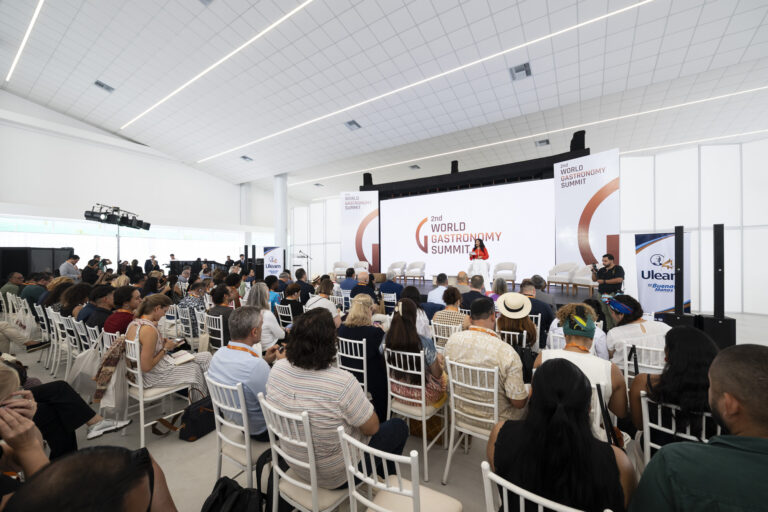
Empowering Youth through Gastronomy was the key theme explored at the 2nd World Gastronomy Summit, held at the Pacific Conference Center, ULEAM. The event was organised by the International Institute of Gastronomy, Culture, Arts and Tourism (IGCAT) and generously hosted by the Prefectura of Manabí, World Region of Gastronomy 2026, in partnership with the Universidad Laica Eloy Alfaro de Manabí (ULEAM) and the Municipality of Manta.
This landmark gathering brought together chefs, policymakers, youth entrepreneurs, educators, and researchers to explore how traditional food knowledge, recipes, and crafts can inspire new job creation and sustainable business models. The summit convened representatives from UNESCO, Slow Food, Crop Trust, Regenerative Vanua, The Food Capitals by Délice Network, Ibercocinas, and the Global Agritourism Network, alongside international leaders from IGCAT’s network of Experts and World Regions of Gastronomy Platform.
Together, they endorsed the Summit’s outcomes, affirming gastronomy’s vital role in driving youth employment, community regeneration, and climate resilience.
WELCOME TO THE 2nd WORLD GASTRONOMY SUMMIT
Dr. Diane Dodd, IGCAT President & Executive Director of the World Regions of Gastronomy, opened the summit with a passionate plea to share responsibility for the world’s food future. She remarked on the collective wealth of knowledge present in the room and emphasized that traditional food must be reframed not as a vestige of the past, but as a living resource for innovation, sustainability, and inclusive growth.
Dra. Jackeline Rosalía Terranova Ruiz, Acting Rector of ULEAM, welcomed the international delegates, highlighting the university’s commitment to integrating gastronomic heritage into academic and cultural development.
Dr. Marcos Zambrano, Academic and Cultural Ambassador for Gastronomía de Manabí, briefly presented the Region to the guests and extended a warm welcome to the university, reflecting on the collective effort of the committee that launched the World Region of Gastronomy title.
Mgs. Marciana Auxiliadora Valdivieso Zamora, Mayor of Manta, welcomed guests to the coastal city, underscoring Manta’s role as a gateway for cultural and economic exchange.
Econ. Leonardo Orlando Arteaga, Prefect of Manabí, spoke about the region’s vision for leveraging its culinary identity to empower local youth and preserve ancestral knowledge.
Manuel Barcia Moreira, representing the Vice-Minister of Culture and Heritage of Ecuador, reaffirmed the National Institute of Cultural Heritage’s (INPC) commitment to initiatives that promote the safeguarding of traditional cuisines, ancestral knowledge, and the country’s agri-food heritage.
Finally, Tatiana Villegas Zamora, Director and Country Representative of UNESCO in Ecuador, outlined UNESCO’s engagement with youth, emphasizing the importance of safeguarding intangible cultural heritage and supporting young leaders in the food sector.
PERSPECTIVES FROM WORLD REGIONS OF GASTRONOMY
The first plenary session moderated by Omar Valdez, IGCAT Board Member, presented a global view of how gastronomy shapes identity and drives innovation, with contributions from leaders across Europe, Africa, the Pacific, Asia, and the Americas. Case studies from Catalonia 2025, Manabí 2026 (Ecuador), Vanuatu 2027, Cap Bon 2028 (Tunisia), Şanlıurfa 2029 (Turkey), Martinique 2030 and Armenia 2031, illustrated how gastronomy can inspire innovation, preserve heritage, and empower communities.
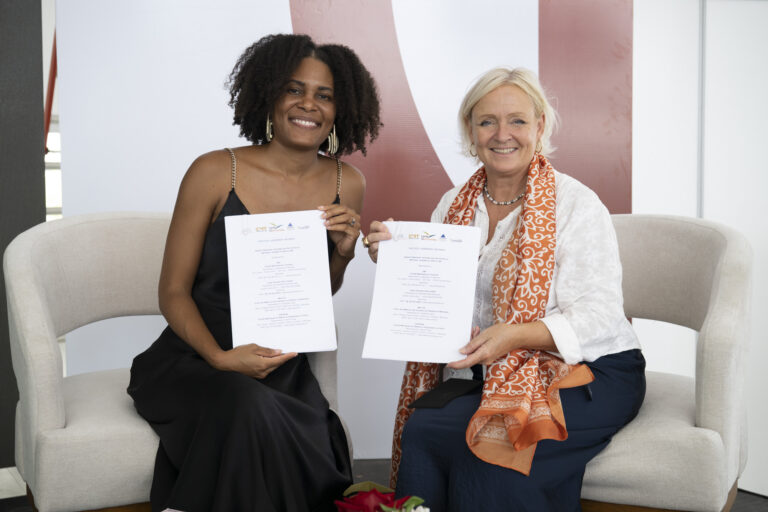
The session also included a formal recognition of Vanuatu as World Region of Gastronomy awarded 2027, celebrating its unique regenerative food systems and cultural heritage.

GLOBAL FOOD CHALLENGES
The second plenary session, moderated by Robert Palmer, IGCAT Ambassador, focused on practical solutions for sustainable food systems and youth engagement. This session also highlighted the outcomes of the pre-summit youth consultations held the day before, which were organized by IGCAT partners to ensure that young voices from diverse international contexts were heard.
Key presentations included:
- Planet-Friendly Food for a New Generation: Patricio Tamariz, Executive Director of Manabí World Region of Gastronomy 2026, shared the conclusions of IGCAT’s 33rd World Regions of Gastronomy Platform Meeting, highlighting how regions can promote sustainable food, protect biodiversity, and create experiences that inspire younger generations.
- Slow Farms – Terra Madre: Esteban Tapia, International Councillor for the Andean Area at Slow Food Ecuador, presented Slow Food’s vision of Slow Farms as a living legacy, emphasizing the role of young farmers in protecting biodiversity and local knowledge.
- Flavours of the Future: Janny van Beem, Global Genebank Coordinator at Crop Trust, shared insights from workshops with ULEAM students, highlighting the importance of rescuing and conserving heirloom seeds to strengthen food security and open opportunities for youth.
- Gastronomic Alliances for a Regenerative Future: Chadley Hollas, Founder of the Global Agritourism Network, reflected on the role of agritourism in strengthening local food systems and climate-resilient futures.
- Iberoamerican Gastronomy and Food: Jesús Mendoza Mejía, President of Ibercocinas, shared the organization’s role in promoting culinary diversity, cultural cooperation, and sustainable food systems across Ibero-America.
MANABITAN PERSPECTIVES – FUTURE CHALLENGES
The first day of the Summit concluded on local insights and the practical challenges of preserving culinary heritage in a modern context. This session brought together local leaders to discuss the intersection of industry, tradition, and youth: Victor Moreira, Executive Director of the Chamber of Industry and Production of Manabí, discussed strategies for enhancing the consumer experience while maintaining authenticity; Chef Fanny Vergara, President of the Red de Cocineras Tradicionales de Manabí and Slow Food Cocina Ancestral Manabita, highlighted the vital role of traditional women cooks in preserving the region’s culinary identity; Angelica Nayely Peñarrieta Chila, from the restaurant Lento pero Seguro Con Dios, shared the viewpoint of the younger generation on balancing heritage with innovation; Orazio Bellettini, from the FUEGOS Foundation and IGCAT Ambassador, outlined initiatives aimed at educating and empowering young chefs and food entrepreneurs.
KEYNOTE: DIGITAL PRESERVATION OF FOODWAYS
On October 16, Pravali Vangeti, Project Coordinator at the Secretariat of the 2003 Convention for the Safeguarding of the Intangible Cultural Heritage, UNESCO, delivered the keynote address on Safeguarding and Transmitting Foodways to Future Generations through the International Food Atlas and Digital Platform. This session emphasized the critical role of digital tools in documenting, preserving, and sharing culinary heritage, ensuring that traditional knowledge remains accessible and relevant for future generations.
PLENARY 1: MAKING FOOD PRODUCTION ATTRACTIVE – THE ROLE OF DESIGN, ARTS AND CULTURE
Chaired by Jaume Gomila, IGCAT Vice-President, this plenary session built on the outcomes of the 1st World Gastronomy Summit in Catalonia. It explored how design, arts, and culture can transform perceptions of food production, making it an attractive and viable career path for young people.
The session featured a diverse range of international experts sharing innovative approaches to reconnecting communities with their food heritage:
- Carlos Ortiz, Founder of Amanah and IGCAT Expert (Mexico), presented his open culinary archive, which helps communities record recipes with their origins and knowledge holders intact, creating new roles for young people as stewards of their food heritage.
- Patrick Sam, Former Chair of the Arts Council of Namibia and IGCAT Expert (Namibia), shared how digital mapping and QR codes have been used to valorize traditional crafts, making them accessible and engaging for modern audiences.
- Nneka A. Nurse, Founder of Best Dressed Plate and IGCAT Expert (Caribbean), discussed how cultural storytelling, culinary experiences, and strategic partnerships can elevate Caribbean cuisine and strengthen its international recognition.
- Chef Per Theodor Tørrissen, Director of ArktiskMat (Nordland, European Region of Gastronomy 2028, Norway), highlighted the ArktiskMat festival, which brings together international chefs, producers, and students to explore Arctic food culture through workshops and culinary experiences.
- Karoly Szabó, Executive Director of Visit Harghita (Harghita, European Region of Gastronomy 2027, Romania), presented the Legendarium, reviving local fairytales and culinary traditions for younger audiences using animated cartoons and innovative storytelling.
- Ufuk Keşoğlu, Business Development Manager at Metro Türkiye (Şanlıurfa, candidate World Region of Gastronomy 2029, Turkey) showcased how a city’s rich cultural and gastronomic heritage can inspire contemporary creativity through cultural routes and festivals.
- MNZM Robert Oliver, Director of the Pacific Island Food Revolution (New Zealand), presented his media-led movement to reconnect Pacific communities with traditional cuisine and healthier local food systems.
PLENARY 2: FROM FIELD TO FUTURE – YOUTH AND GASTRONOMY
Chaired by Emanuela Panke, President of Iter Vitis, Cultural Route of the Council of Europe and IGCAT Ambassador, this plenary session explored how innovation, entrepreneurship, and people-centred leadership can empower producers and communities.
Featuring a diverse range of international experts, this session examined the conditions needed for these initiatives to thrive, including partnerships between institutions and territories, access to training, finance, and markets, the adoption of digital tools, and spaces where young people can test and develop their ideas:
- Sergio Riudavets, Top50 Farmers (Menorca, European Region of Gastronomy 2022, Spain), shared his innovative and regenerative work connected to local food production, recently recognized as making him one of the Top 50 Farmers in Europe.
- Katharina Häni, Agricultural Engineer and co-founder of Biofarmland (Banat, European Region of Gastronomy 2028, Romania), discussed her focus on organic cereals and teas in Eastern Europe.
- Luisa Vélez-Sabando, National Coordinator of the AgroJoven Ecuador Program, presented initiatives implemented nationwide to generate employment, market systems, bioenterprises, agribusinesses, ecogastronomic experiences, and innovation, all led by youth.
- Ioannis Vekris, Fisherman and Ichthyologist from Amorgos (South Aegean, Candidate World Region of Gastronomy 2028, Greece), highlighted the vital role of fishers in safeguarding biodiversity, sustaining island food cultures, and inspiring future generations.
- Lucas Oshun, Founder and Director of the Regeneration Field Institute (Manabí, World Region of Gastronomy 2026, Ecuador), demonstrated how regenerative agriculture can transform young people’s lives by providing skills, confidence, and opportunities.
- Shpresim Domi, Global Agritourism Network – GAN (Albania), explored how primary producers can supplement their income by integrating visitor experiences into their activities.
PLENARY 3: YOUTH, FOOD, AND INTERPRETING THE PAST FOR A FUTURE OF HEALTH AND WELL-BEING
Chaired by Chef Rodrigo Pacheco, Founder of Bocavaldivia, this plenary session positioned gastronomy as a public good, exploring how inherited food knowledge can be combined with education, technology, international cooperation, and community action to address contemporary challenges in health and well-being.
Through examples from different continents, the plenary examined the role of global alliances, civil society organisations, families, schools, producers, and custodians of food culture in creating more conscious, equitable, and resilient food systems:
- Renesis Nikos, Director of the Nursery of the South Aegean Region and Head of the Animal Production Department for the Dodecanese (South Aegean, Candidate World Region of Gastronomy 2028, Greece), presented the Aegean Gardener Programme, which introduces schoolchildren across the South Aegean islands to the principles of the Aegean Diet through hands-on gardening using local seeds and traditional cultivation methods.
- Rosa Rodríguez Jaramillo, Senior Director of Fundación Heifer Ecuador, highlighted the importance of building local capacity, promoting sustainable production systems, improving access to markets, and ensuring that communities can determine how food is produced, distributed, and consumed according to their needs, knowledge, and territories.
- Luz Elena Navarro, Community Participation Officer at the UNDP Conscious Food Systems Alliance – CoFSA (Mexico), shared how fostering conscious food systems integrates sustainability, equity, and climate resilience.
- Camilla Digre, Project Manager for the Norway Seafood Festival & Trondheim Brewery Festival (Trondheim-Trøndelag, European Region of Gastronomy 2022, Norway), explored how gastronomic festivals can connect producers, young people, communities, and visitors, while strengthening local pride and opportunities linked to regional food culture.
- Sunanthee Kanchanawat, Professor at The Hong Kong Polytechnic University and IGCAT Expert (Hong Kong, China), discussed study visits to Thailand that help young consumers better understand the food they eat and how their choices can support a sustainable food chain.
- Asuao Kirifi Pouono, Member of the Pacific Regenerative Agritourism Network (PRAN), President of Samoa’s Society of Agricultural Professionals and IGCAT Expert (Samoa), talked about Samoa’s experience in empowering young people through agribusiness competitions, cocoa value-added production, and emerging agritourism opportunities.
- Karissa Becerra, Founder and Director General of La Revolución & Pontifical Catholic University of Peru, presented Saber Comer, an educational methodology that uses cooking, sensory learning, biodiversity, and science to transform children’s relationship with food.
COLLABORATIVE STRATEGIES FOR YOUTH EMPOWERMENT
The 2026 World Café served as a critical engine for actionable change, bringing together approximately 160 carefully selected delegates across 16 round tables. The session leveraged the unique professional expertise of each participant to move beyond discussion and toward concrete strategy.
The primary objective was to identify the most urgent policy needs and develop five implementable project or programme examples per table. These interventions were designed to empower young people through practical solutions in employment, entrepreneurship, and community regeneration. By fostering direct collaboration among global experts, the World Café aimed to translate the summit’s thematic discussions into specific policy recommendations for regional and national governments while developing tangible project models that can be adapted and implemented by regions worldwide.
The outcomes from each table were presented the following day and collated into a comprehensive final report. This document serves as a roadmap for bold actions, positioning food as a driving force for innovation, economic opportunity, and resilient community building.

SUMMIT CONCLUSIONS AND FUTURE PATHWAYS
On 17 October, Dr. Diane Dodd, IGCAT President, delivered the 2nd World Gastronomy Summit Conclusions. Dr. Dodd highlighted the summit’s key achievements in reframing traditional food as a living resource for innovation, sustainability, and inclusive growth. She emphasized the urgent need to support youth employment and entrepreneurship through traditional food value chains and called for continued collaboration among regions, institutions, and stakeholders to build resilient food systems.
Following the conclusions, the summit featured an Act of Gratitude, acknowledging the partners, hosts, and participants who made the event possible. The Prefect of Manabí, Econ. Leonardo Orlando Arteaga, led a symbolic Grand Tour of Manabí, highlighting the region’s ongoing commitment to leveraging its gastronomic identity for regional development.
The summit also marked a significant milestone in the World Regions of Gastronomy journey, with the official announcement of Vanuatu as the host of the 3rd World Gastronomy Summit in 2027. This transition underscored the global nature of the initiative and the shared responsibility among regions to advance the agenda of sustainable and inclusive food systems.
In his Closing Remarks, Econ. Leonardo Orlando Arteaga, Prefect of Manabí, thanked the international community for their engagement and expressed Manabí’s pride in having hosted this pivotal gathering. He emphasized that the partnerships forged in Manta would continue to drive positive change, ensuring that the voices of young people and the value of traditional knowledge remain at the heart of global food policy.
The insights and outcomes from the 2nd World Gastronomy Summit will be compiled into a final report and distributed to governments, institutions, and stakeholders worldwide, serving as a catalyst for action in the years to come.
About the World/ European Region of Gastronomy Award
The International Institute of Gastronomy, Culture, Arts and Tourism (IGCAT) is the operative institute that oversees the management and coordination of the World and European Region of Gastronomy Award. IGCAT believes that cross-sectoral collaboration will help regions find solutions to current day challenges and thus, the Award is not only given because a region has great gastronomy but because the whole region is working together to create a more sustainable food future. IGCAT encourages not only hospitality industries to participate but everyone across the whole eco-system including public, private, NGO and academic institutions.
The first step in applying for the Award is to bring these different entities together. The next stage is to create a bid book that pulls together as many great initiatives as possible so that people within the region themselves can begin to appreciate how rich their resources are. The third stage is a jury visit that concludes with a recommendation for IGCAT Board and a report to help the region in preparing a successful journey.
Candidate and awarded Regions of Gastronomy, guided by IGCAT, are working together to strengthen food security through the celebration of distinctive food cultures; create employment by stimulating creativity and gastronomic innovation; nourish children and adults through culinary and cultural education; drive environmental sustainability in tourism, hospitality and agricultural sectors; support balance and sustainable tourism practices; highlight and support expertise from within rural and urban communities, creating connections and sharing good practises; and ultimately they contribute to community health and well-being.