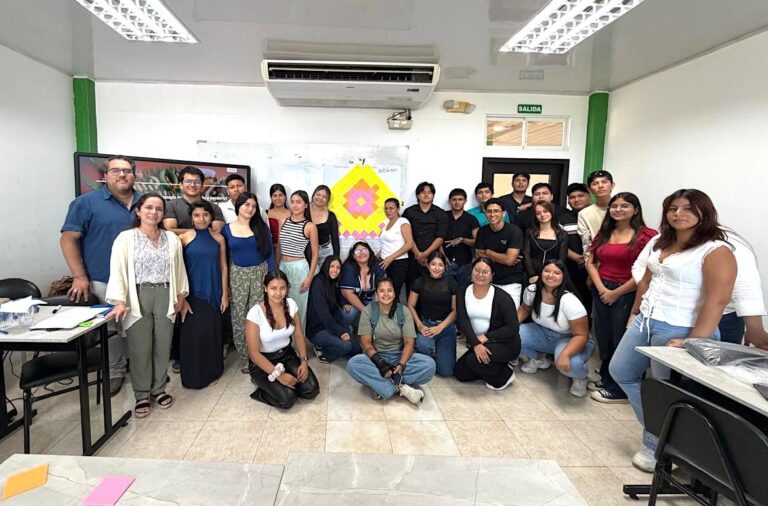
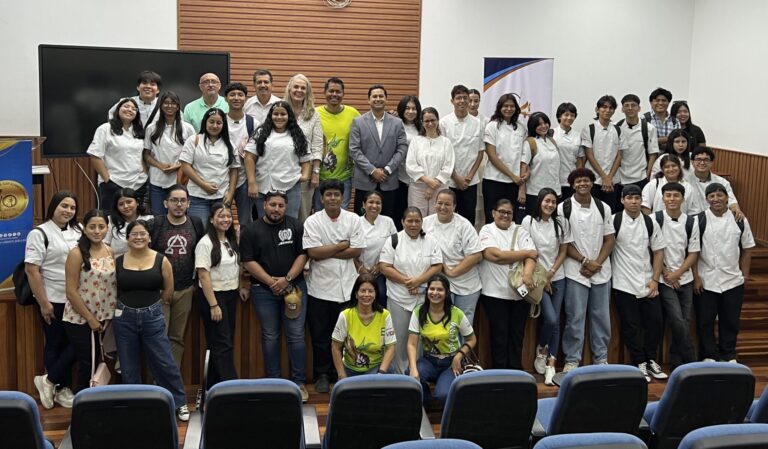
Regenerative Vanua and the Global Agritourism Network (GAN) led a pivotal pre-summit field workshop titled “A Hands-On Journey Through Sustainable Food Experiences”, in the lead-up to the 2nd World Gastronomy Summit, held in Manta, Ecuador, on 15–17 October 2026.
The activity was primarily organized by Dr. Luis Andrade, ESPAM Lecturer, Slow Food ALMA and IGCAT Expert, with facilitation by Jerry Spooner and Pepe Fassos from Regenerative Vanua, and Chadley Hollas from the Global Agritourism Network, supported by Luna Graziottin, IGCAT Partnerships Manager. Held on October 14, the day brought together students from the Escuela Superior Politécnica Agropecuaria de Manabí (ESPAM), volunteers from Slow Food ALMA, and local youth to explore the power of regenerative farming and indigenous crops, exploring the critical link between socio-environmental regeneration, agroecological production, and the development of local gastronomic ecosystems.
A visit to ESPAM: Meeting the future of Manabitan agriculture
The day began with a visit to the Manuel Félix López Polytechnic School of Agricultural Sciences of Manabí (ESPAM MFL), one of Ecuador’s youngest public universities. Located in the heart of Manabí province, the institution focuses on addressing the challenges faced by the rural sector along the Ecuadorian coast.
The delegation was welcomed by the university’s rector, Dr. Guillermo Félix Mendoza, who addressed the audience, extended a welcome to the special guests on behalf of the Manabí polytechnic community, and expressed the university’s openness to hosting initiatives such as this one. Representatives from Regenerative Vanua and GAN then introduced the concepts of regenerative agriculture and agritourism as viable career paths for young people.
The event was attended by academic authorities, faculty members, students from the fields of Gastronomy, Tourism, Agricultural Engineering, Agroindustry, and Production and Environment, and young volunteers from the Slow Food ALMA collective.
From ESPAM to Arboleros Farm: A Journey of Regeneration
Following the presentation, a select group of students, accompanied by IGCAT’s delegation, traveled to Arboleros Farm, a regenerative farming initiative by the Regeneration Field Institute. Located in Chone, a region meaning “Life” in ancestral languages and home to Manabí’s largest rural population, the farm showcases the transformation of deforested lands into thriving agroforestry systems.
During the tour, Chadley Hollas (Global Agritourism Network), Jerry Spooner and Pepe Fassos (Regenerative Vanua), and Lucas Oshun and Raisa Torres (Regeneration Field Institute), discussed the importance of soil health and climate-resilient agriculture. The group explored how regenerative practices not only restore biodiversity but also produce high-value crops like Cacao Fino de Aroma, offering economic opportunities for rural communities.
Agritourism and Youth Empowerment at the Gastronomic Lab
The day concluded at the Chone Gastronomic Laboratory, a hub for workshops and training linked to the Food and Agriculture Organization (FAO) and regional agro-tourism initiatives. Luisa Vélez-Sabando, National Coordinator of the FAO’s AgroJoven Program in Ecuador, led a discussion on how agritourism can drive the circular economy and strengthen local food systems.
A significant portion of the session was dedicated to the FAO’s AgroJoven program, an initiative designed to improve youth employment in rural areas. Teenagers from the Chone region shared their food and cultural traditions, highlighting their role as custodians of local heritage. This interaction underscored the importance of connecting young people directly with producers and traditional knowledge holders.
The insights and outcomes from this participatory workshop were presented during the Global Food Challenges plenary session on the first day of the 2nd World Gastronomy Summit. Mr. Hollas shared how agritourism networks can strengthen local food systems and create climate-resilient futures. He highlighted the potential of integrating visitor experiences into agricultural activities to supplement producer income and foster a deeper connection between consumers and the land.
Strengthening Institutional Ties
Following the summit activities, Shpresim Domi and Chadley Hollas of the Global Agritourism Network officially signed an agreement with Dr. Diane Dodd, IGCAT President, formalizing GAN as an official IGCAT partner. This new partnership reinforces the collaborative framework between the two organizations, committed to promoting sustainable tourism, agricultural innovation, and youth engagement in the food sector.