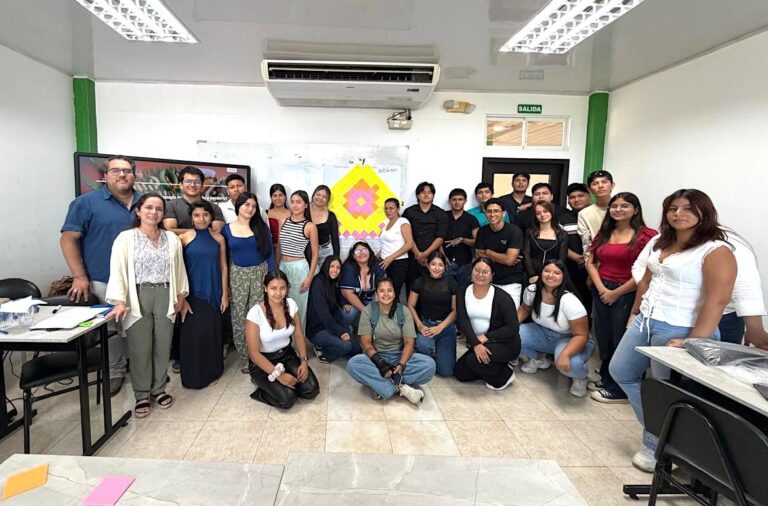
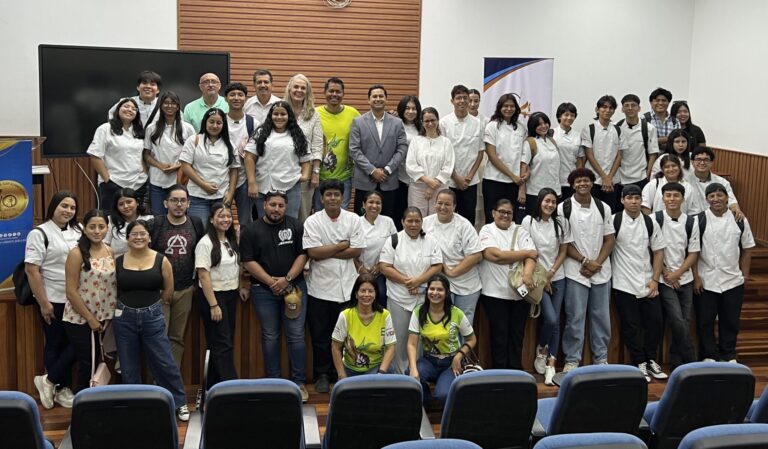
In the lead-up to the 2nd World Gastronomy Summit, held in Manta, Ecuador, on 15–17 October 2026, Jesús Mendoza Mejía, President of Ibercocinas, and Dr. Adriana Arista-Zerga, IGCAT Expert and International Specialist in Cultural and Food Heritage, led a pivotal pre-summit workshop for 40 students from the Gastronomy Technology program at the Universidad Laica Eloy Alfaro de Manabí (ULEAM). The event was facilitated by IGCAT, with Norma Bock, IGCAT Coordinator for the Americas, present to support the initiative.
This activity underscored IGCAT’s core values of intergenerational dialogue, community engagement, and the safeguarding of intangible cultural heritage by placing young people at the center of the conversation about the future of food.
As part of the summit’s pre-programme, the workshop explored the deep connections between food, biodiversity, traditional knowledge, and the gastronomic identity of Manabí. Using a three-tiered methodology known as the “Culinary Mandala”, participants analyzed the origins of local food, production techniques, and the role of traditional recipes in shaping cultural identity.
A Diagnostic of Challenges and Opportunities
The workshop served as a space for critical reflection, allowing students to map the reality of their territory across four levels: local ingredients and agrobiodiversity; transformation and ancestral techniques; social practices and cultural memory; and environmental and economic challenges.
The students identified pressing issues facing the region, including:
- Economic Instability: Rising costs of fresh ingredients making traditional dishes inaccessible to local communities.
- Ecological Crisis: Overexploitation and climate change threatening key resources like black mussel, crab, and shrimp.
- Loss of Heritage: The decline of ancestral techniques, such as wood-fired oven cooking, due to modern lifestyles and the rise of ultra-processed foods.
- Labor Precarity: High costs of professional equipment and the pressure to follow global trends over local roots.
Youth-Led Solutions for a Sustainable Future
In response to these challenges, the students developed a manifesto of five key commitments to drive sustainable change in their community and professional practice:
- Research and engage with farming, livestock rearing, and artisanal fishing practices in our communities.
- Respect seasonal fishing closures, embrace the zero-kilometre food philosophy, and reduce food waste.
- Support the local economy by buying directly from farmers, livestock producers, and fishers, without intermediaries.
- Encourage growing your own vegetables and other necessary ingredients.
- Innovate while preserving your roots, reviving and passing on ancestral recipes.
These commitments emphasize the need for “innovation with roots”, ensuring that new culinary trends do not erase local identity but rather reinforce it.
Insights Shared at the Summit
The insights and outcomes from this participatory workshop were presented during the Global Food Challenges plenary session on the first day of the 2nd World Gastronomy Summit. Mr. Mendoza Mejía, shared the students’ perspectives with the international audience, highlighting how traditional cuisines act as living networks that strengthen communities against global crises such as climate change and biodiversity loss. He emphasized the importance of partnerships between institutions, territories, and educational bodies to support young people in creating more conscious and resilient food systems.
Strengthening Institutional Ties
Following the summit activities, Mr. Mendoza Mejía officially signed an agreement with Dr. Diane Dodd, IGCAT President, formalizing Ibercocinas as an official partner of IGCAT. This new partnership reinforces the collaborative framework between the two organizations, committed to promoting culinary diversity, cultural cooperation, and sustainable food systems across Ibero-America and beyond.
The following students contributed to the formulation of the manifesto of commitments:
- Andrea Alejandra Mera Villigua
- Andrea Elizabeth Zambrano Zambrano
- Andrea Zuleyka Cedeño Estrada
- Ángel Alberto Villalba Delgado
- Bryan Jair Figueroa Reyes
- Danna Michelle Quiroz Mero
- Danna Valverde Cornejo
- Daysi Denisse Cedeño Flores
- Digna Viviana Montes Zambrano
- Doménica Mishell Montuano Filay
- Enyika Dayana Chávez Cardozo
- Guillermo Fabían Mora Mila
- Jhosenka Samantha Mendoza Macías
- Juan Carlos Pico Catagua
- Juan David Cantos Narvaez
- Julieth Zulay Granda Murillo
- Justhine Daniel Chipantiza Pesantes
- Kathya Carolina Quijije Delgado
- Leslie Natasha Reyes Archundia
- Lissani Noemy Arévalo Vélez
- Maite Valeska Delgado Briones
- Mario Braynerth Loor García
- Matheus Peralta Macías
- Michael Daniel Mendoza Macías
- Nohelia Stefania Jaguana Zambrano
- Tabata Dominique López Bazurto
- Tatiana Gisbelly Muñiz López
- William Eduardo Pinargote Quijije