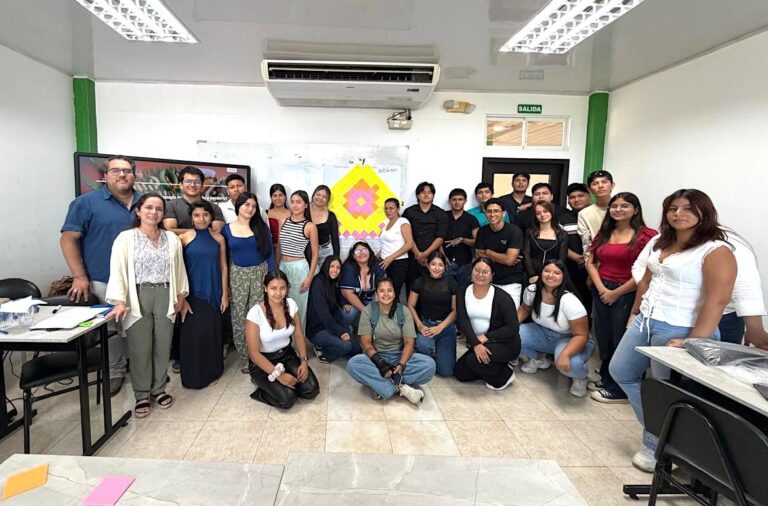
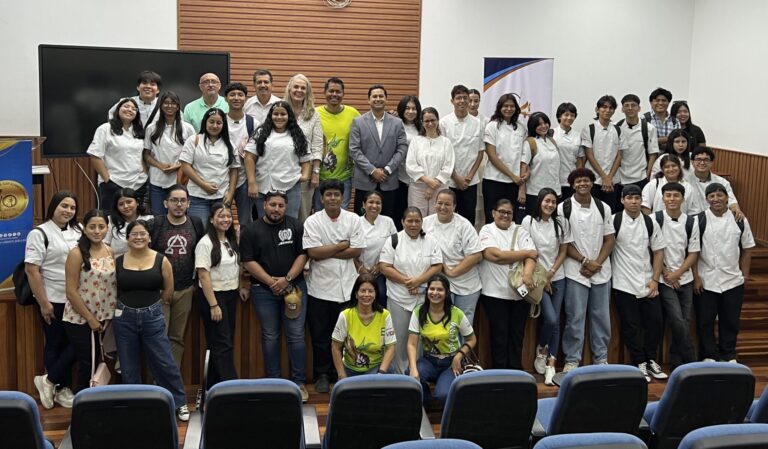
On October 14 2026, prior to the 2nd World Gastronomy Summit in Manta, Crop Trust convened over 50 participants including students from the Universidad Laica Eloy Alfaro de Manabí (ULEAM) and the Universidad Técnica de Manabí (UTM), for a pivotal workshop titled “Flavours of the Future: Agrobiodiversity and Nutrition in Ecuadorian Gastronomy”.
Supported by Ecuador’s National Genebank, housed by the National Institute of Agricultural Research (INIAP), and the Inter-American Institute for Cooperation on Agriculture (IICA), the session was facilitated by Janny van Beem, Global Genebank Coordinator at Crop Trust, and Luis Salazar, Head of Project Partnerships and Communications at Crop Trust, with Matilde Ferreira, IGCAT International Projects Manager, present to support the initiative. The day explored the critical link between preserving food heritage, agricultural biodiversity, and building resilient local economies.
Reclaiming Food Heritage and Combating “Desuse”
The workshop served as a platform for deep reflection on the “desuse” of traditional crops and the urgent need to reconnect with local roots. Key speakers addressed the challenges facing Ecuador’s genetic diversity:
- César Tapia (INIAP) emphasized that protecting Ecuador’s biodiversity, from maize and cacao to passiflora and chote, requires creating demand. He highlighted the vital role of young chefs and consumers in embracing these species to keep them alive.
- Sarah Paule Dalle (NMBU) and Prof. Oscar Salvador (ULEAM) discussed the challenges of seed systems and the impact of “desuse” on traditional knowledge.
- Víctor Hugo (FOCAZNOM) highlighted the importance of the Campesino a Campesino movement and recovering territory through “edible forests” and local community projects.
From Theory to Sensory Reality
A significant portion of the workshop was dedicated to listening to students, understanding their concerns, and gathering their suggestions for improvement. Engaging young people is not just about education; it is about empowering them to become active guardians of agrobiodiversity.
The event concluded with a practical tasting session in the Gastronomic Laboratory led by Chef Luis Reyes. Participants experienced the cultural significance of traditional dishes like Chicha de maíz and Moro con cuero, connecting theoretical knowledge with sensory reality. This hands-on approach allowed students to rotate between stations, learning about the cultural significance and historical processes of three key Manabitan crops: rice, corn, and peanuts.
Insights Shared at the Summit
The insights and outcomes from this participatory workshop were presented during the Global Food Challenges plenary session on the first day of the 2nd World Gastronomy Summit. Janny van Beem shared the importance of rescuing and conserving heirloom seeds to strengthen food security and open opportunities for youth. She highlighted how Crop Trust supports INIAP’s genebank to conserve and make available crop diversity, and works alongside the Norwegian University of Life Sciences (NMBU) to strengthen national seed systems under the Biodiversity for Opportunities, Livelihoods and Development (BOLD) project.
This pre-summit activity demonstrated that empowering youth is essential for safeguarding agrobiodiversity. By giving young students a voice and a platform to engage with traditional crops, Crop Trust and IGCAT reaffirmed their commitment to a food system that is resilient, diverse, and deeply rooted in cultural heritage.